The Importance of Deck and Patio Cleaning Before Cold Weather Hits
If you manage a residential community, decks and patios aren’t “extras.” They’re everyday touchpoints where residents walk, relax, grill, and gather—so they influence first impressions, resident satisfaction, and safety all at once. They’re also high-value assets: wood, composite decking, rail systems, stairs, concrete patios, and pool decks are not inexpensive to repair or replace, and deterioration is rarely a “sudden” problem. It’s usually the slow kind—moisture, grime, organic buildup, and seasonal wear compounding week after week until you’re dealing with a bigger repair scope than you planned.

That’s why October is such a strategic time to schedule residential deck and patio cleaning. In most seasons, timing is the difference between “preventive maintenance” and “damage control.” Shine Time’s own seasonal power-washing guidance highlights a key fall reality: autumn leaves and debris can stain and cling to exterior surfaces, and cleaning before winter helps prevent grime from freezing into surfaces as temperatures drop.
For property managers, the goal is predictability: clear scopes, fewer surprises, and less reactive maintenance. Shine Time is built around making that planning easier for community and property management—positioning itself as a partner for property managers and offering a collaboration-forward approach that includes working with residents and stakeholders to align scope, timeline, and pricing.
Moisture is the enemy: how fall buildup turns into mold, mildew, and rot
The biggest reason to clean decks and patios before cold weather hits is moisture management.
Leaves, pine needles, and organic debris collect in exactly the places that are hardest to monitor across a community: between deck boards, in stair corners, under planters, along patio edges, and in shaded courtyard areas. Once that debris mats down, it acts like a sponge—holding water against the surface and slowing drying. Montgomery County’s Deck Maintenance Inspection Guidelines call out the consequences directly: mildew can create a slipping hazard, and accumulation of leaves can rot and speed up deterioration.
This isn’t just a cosmetic issue. Moisture is the driver behind many of the problems property managers see on exterior amenities. The U.S. Environmental Protection Agency emphasizes that moisture control is the key to mold control, and also notes that mold won’t grow without moisture. When wet debris stays in place across a deck or patio, it encourages biological growth and creates that slippery, dark film that tends to return quickly if it isn’t addressed thoroughly.
Wood decks are particularly vulnerable because decay fungi require water to do their work. The U.S. Forest Service’s Wood Handbook explains that serious decay occurs only when wood moisture content is high (above the fiber saturation point, average ~30%) and that wood will not decay if it’s kept “air dry.” In straightforward property-manager terms: anything that keeps boards wet—leaf piles, shaded algae, clogged gaps between boards—raises the risk of rot, splintering, and shortened service life.
In Hampton Roads, moisture pressures can be even more persistent because of the coastal environment. Shine Time’s Virginia Beach maintenance guidance highlights that humidity and storms create favorable conditions for algae, mold, and mildew—especially in shaded or poorly ventilated areas like decks. That’s why fall cleaning should be viewed as prevention, not presentation: you’re reducing wet time heading into a season with shorter days and slower drying cycles.
Safety and liability: reducing slip risks and catching problems early
Deck and patio cleaning is also a direct safety play—especially in communities where outdoor stairs, railings, pool decks, and shared patios see daily foot traffic.
When leaf residue, mildew, and algae build up, traction drops. Add rain, irrigation cycles, or even early-morning dew and you’ve got a recipe for slip-and-fall incidents. Montgomery County explicitly states that preventing mildew is essential because mildew can create a slipping hazard. Safety guidance for public facilities also emphasizes that floor/walking conditions can change rapidly due to weather and contaminants, impacting slip risk as surface friction changes.
This matters for residents and for your operations. Your maintenance team, contractors, vendors, and leasing staff are also using these walking surfaces during turnovers, work orders, inspections, and showings. OSHA’s walking-working surfaces standard requires that walking-working surfaces be maintained free of hazards such as spills, snow, and ice. While OSHA is workplace-oriented, the operational takeaway aligns perfectly with property management reality: clean and hazard-reduced walking surfaces support safer day-to-day operations.
Fall cleaning is also an ideal time to catch structural and drainage red flags early—before winter adds more saturation, more freeze/thaw stress, and more urgent “needs-to-happen-now” work orders. With grime removed and furniture cleared, it’s easier to identify soft spots, popped fasteners, failing stair treads, unstable rails, and areas where water consistently pools. Montgomery County’s deck guidance recommends at least annual maintenance and provides a practical inspection checklist covering wood member integrity, fasteners, stairs, and guardrails.
Different materials, different methods: cleaning without damage
Most residential communities have a mix of surface types. Successful deck and patio cleaning is not one-size-fits-all—it’s surface-appropriate work, done with methods that protect the material and the investment.
Wood decks need controlled technique, not brute force. Power washing can be effective, but it must be done correctly. Montgomery County notes that power washing is a great way to clean a deck, yet warns that improper power washing can raise coarse wood grain and increase the chance of splinters. For property managers, this is exactly why a professional approach matters: the right pressure, the right tip selection, correct distance from the surface, and a consistent method that cleans with the grain while protecting stairs, rails, and surrounding landscaping.
Composite decking is durable, but it can be warranty-sensitive. Decks.com cautions that a high-powered pressure washer could void warranties on many composite decking brands and advises checking manufacturer cleaning recommendations first. If your communities include newer composite installations, this is a critical operational detail: the “wrong” cleaning method can turn routine maintenance into a warranty conversation—or worse, accelerated wear.
Concrete patios, sidewalks, and pool decks come with their own winter risks. Concrete deterioration in cold weather is closely tied to moisture and freeze-thaw cycling. The American Concrete Institute’s freeze-thaw overview explains that frost damage requires sufficient internal moisture plus freezing conditions, and that repeated freezing and thawing increases damage. It also notes that surface scaling is associated with de-icing salt use and is the most common frost damage type.
NRMCA’s “Scaling Concrete Surfaces” guidance adds a property-friendly takeaway: concrete slabs and surfaces saturated with water and exposed to freezing and thawing cycles are susceptible to scaling, and deicing chemicals can exacerbate scaling by increasing surface saturation and the number of freeze-thaw cycles. Practically speaking, fall cleaning isn’t only about wood—it also removes grime that holds moisture on hardscapes, improves traction, and highlights spots where drainage correction or sealing may be the next smart step.
Clean first, then protect: prepping for sealing and winter performance
For many properties, fall cleaning is step one of a bigger “protect the asset” plan. It’s also the best time to decide what should be sealed, stained, or scheduled for future resurfacing—because you can actually see the surface clearly once buildup is removed.
Where decks are due for staining or sealing, timing matters. Cabot’s deck staining guidance recommends applying stain when air and wood surface temperatures are between 50° and 90°F, avoiding rain in the forecast for the next 12–24 hours, and allowing a cleaned deck to dry for multiple days before staining. Thompson’s WaterSeal similarly instructs users to keep surface and air temperatures above 50°F during application and for 48 hours after application, and to avoid applying product if rain is forecast within 24 hours.
Those requirements are a big reason October is so valuable: you’re more likely to hit the temperature range and dry-weather window that helps coatings adhere and cure properly. This is where proactive scheduling pays off. If you wait until late fall (or until the first cold snap), you may still be able to clean—but you may lose the best window to protect the surface afterward.
Even when staining or sealing isn’t immediately planned, a deep clean still supports winter performance by removing contaminants that hold moisture and create slick film. Shine Time’s powerwash services describe using eco-friendly specialty soap to remove mold, dirt, algae, and mildew (with the aim of a longer-lasting clean), which maps directly to what residents and property managers want heading into wetter months.
A practical October process for property managers in Hampton Roads
For communities with multiple buildings (or a portfolio across Hampton Roads), the goal is a repeatable, low-disruption process that scales—and can be documented for ownership, boards, or asset management.
Start with an inventory and risk map. Identify every deck, stair run, balcony walkway, patio, and high-traffic concrete area. Prioritize daily-use zones: entrances, mail kiosks, dog-walk routes, pool decks, and grilling pads. These are the same places where wet leaves and biological film increase traction risk the fastest.
Plan resident communication early, not the day-of. The most successful projects are the ones where residents know what will be cleaned, what needs to be moved (planters, mats, furniture), and where to expect temporary wet-surface signage.
Then, partner with a vendor that can manage the details without creating more work for your team. Shine Time’s commercial/community services emphasize minimizing property manager workload, including managing communication with tenants as part of the project process. The same page also highlights periodic maintenance and a complimentary RFR consultation to help plan and budget for future projects—useful if you’re trying to standardize exterior maintenance across multiple communities rather than handle every property ad hoc.
Bundle services when it makes operational sense. Fall is often the time you’re also considering house washing, walkway cleaning, or painting touch-ups before year-end budgeting closes. Shine Time offers multi-service discounts for bundled cleaning and painting, which can simplify scheduling when crews are already on site.
Finally, treat cleaning as an inspection opportunity. If the crew notices soft spots, loose rails, or recurring pooling areas, document those findings and route them into your maintenance queue. The Montgomery County checklist mindset—routine cleaning/sealing plus at least annual inspection—captures the core property-management principle: consistent maintenance protects both longevity and safety.
Because jobsite safety matters in occupied communities, vendor qualifications matter too. Shine Time states that safety is a core value and that staff training includes OSHA safety classes and certifications. The company also emphasizes eco-friendly cleaning agents “so that persons, pets, and plants are not at risk,” which is particularly relevant in residential environments with landscaping, pet-walk routes, and outdoor living spaces close to the work area.
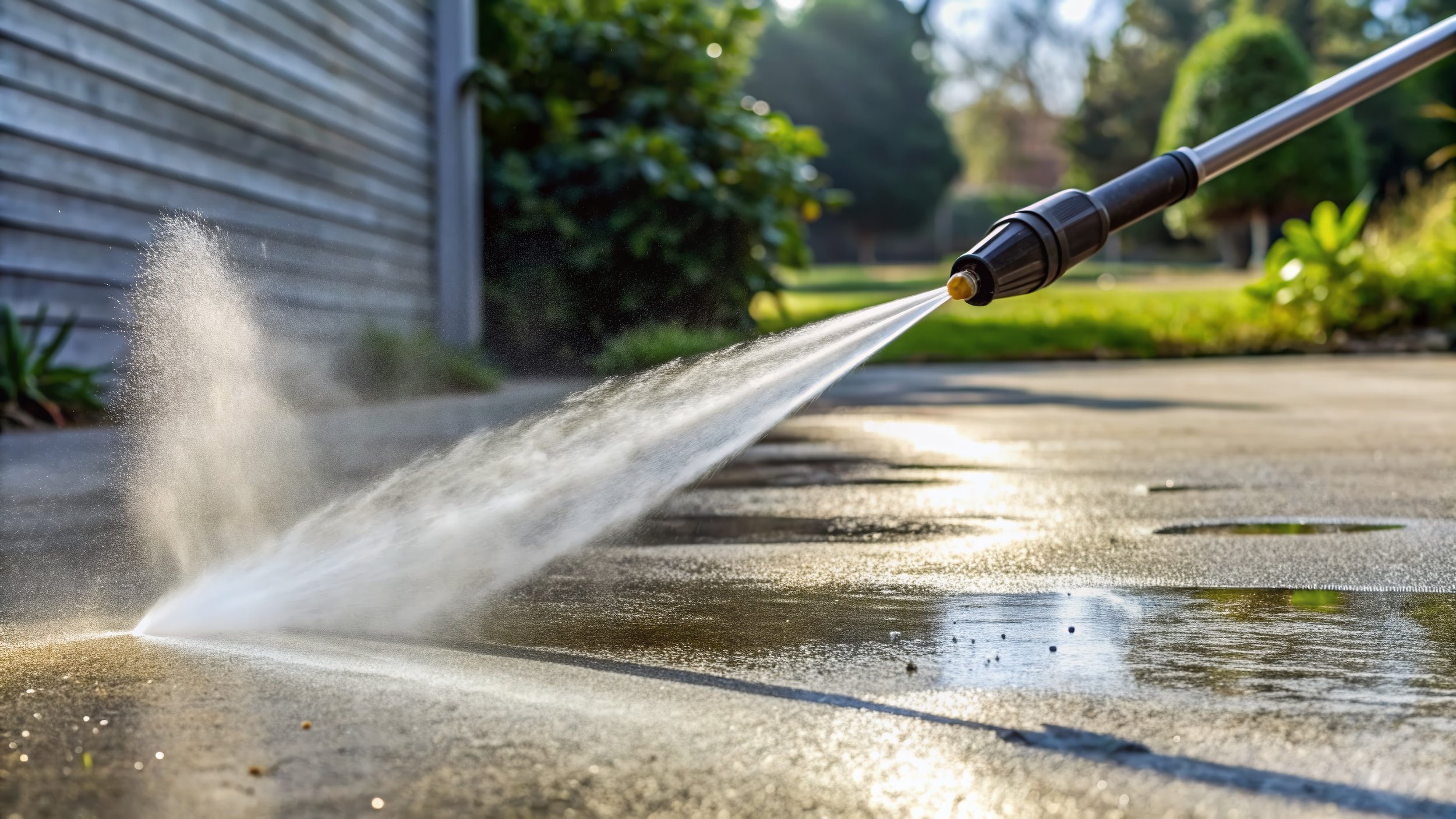
October doesn’t last forever. If your decks and patios already show dark organic buildup, slippery patches, or leaf accumulation in corners, now is the time to reset them before winter weather increases moisture exposure and traction risks. Contact Shine Time for professional residential deck and patio cleaning in Hampton Roads, and let our team help you keep your community clean, safe, and ready for the season ahead.
